
Canada needs to be better prepared for wildfire
Wildfire risk is growing across Canada
A decade after the Fort McMurray wildfire, Canada's wildfire risk continues to grow. Wildfire seasons are starting earlier, lasting longer and becoming increasingly difficult to contain. Communities across the country are experiencing more evacuations, property damage and economic disruption.
The trend is clear. Between 2016 and 2025, more than 46 million hectares burned across Canada, an 81% increase compared with the previous decade. Over the same period, insured wildfire losses increased by more than 1,000%, reaching $8.1 billion.
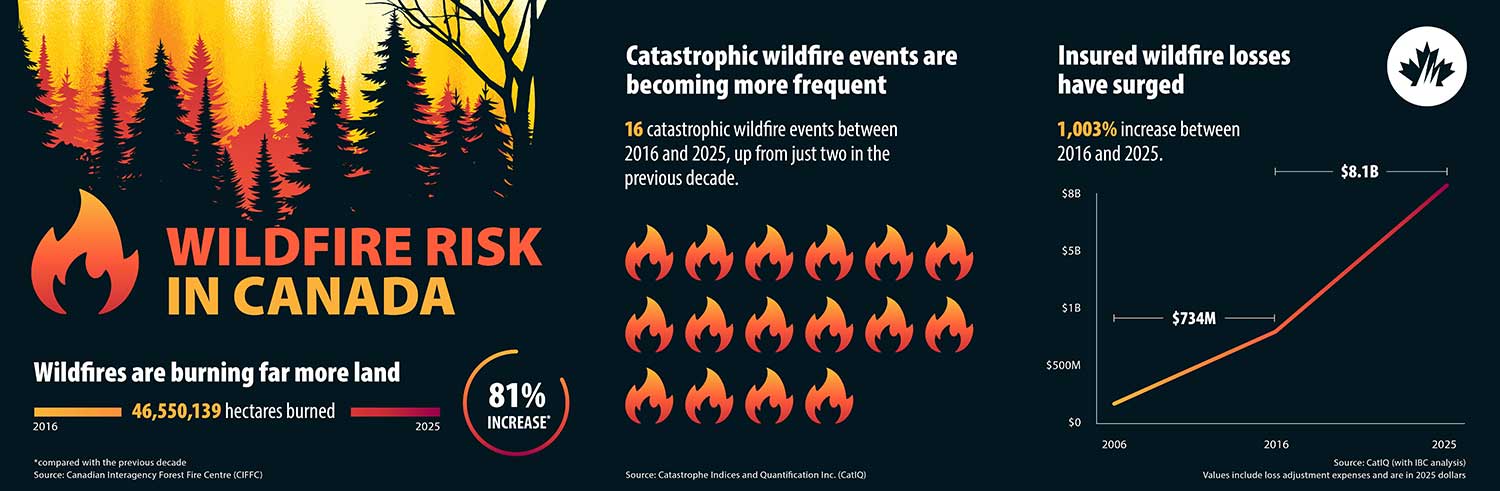 Canada cannot eliminate wildfire risk, but it can reduce the damage wildfires cause to communities, homes, businesses and families.
Building more wildfire-resilient communities
The good news is that proven solutions exist. Research by the Institute for Catastrophic Loss Reduction found that every $1 invested in wildfire-resilient construction for new homes can generate up to $34 in avoided future losses in high-risk areas.
IBC is calling on governments to take practical steps to reduce wildfire risk and strengthen community resilience:
Strengthen land-use planning: Governments should strengthen land-use planning policies and avoid new development in high-risk wildfire areas unless adequate protection measures are in place.
Help homeowners reduce risk: Programs such as FireSmart can help reduce wildfire damage. Governments should support practical, affordable resilience measures that help homeowners reduce wildfire risk and recovery costs.
Invest in prevention and suppression: Reducing wildfire losses requires more than responding after a fire starts. Continued investment in prevention, mitigation and suppression resources can help reduce the frequency, size and impact of wildfires.
Improve wildfire hazard mapping: Better risk information leads to better decisions. Governments should improve wildfire hazard mapping so resilience investments can be prioritized in the communities facing the greatest risk.

The time to act is now
The lessons from Fort McMurray and other recent wildfire disasters are clear: investing in resilience before a wildfire occurs is significantly less costly than rebuilding afterward.
By investing in mitigation, improving planning and strengthening community resilience, governments can help reduce future losses and better protect Canadians from growing wildfire risk.
Explore our other areas of focus
Trending News

climate
Fires, floods and storms: $3.7 billion in insured damage makes summer 2026 third worst on record
Oct 22, 2026 | NATIONAL
climate, Insurance Industry
Early September storms in the GTA and southern Ontario cause $563 million in insured damage
Oct 14, 2026 | ON
climate, home
New study finds hail-resistant upgrades may reduce Alberta homeowners’ insurance premiums by up to 50%
Sep 28, 2026 | ABclimate, Severe Weather
Summer storms across Alberta, Saskatchewan and Manitoba cause more than $1.8 billion in insured losses
Sep 22, 2026 | AB, MB, SK
climate, Severe Weather
How Many Times Before We Act?
Sep 15, 2026 | Written by Amanda Dean
climate
July and August Niagara Region flooding causes nearly $360 million in insured damage
Sep 10, 2026 | NATIONAL